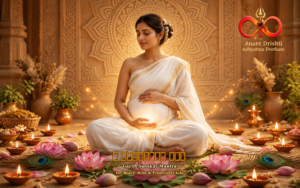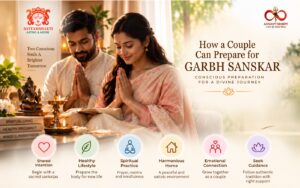
A child’s first home is not the nursery prepared after birth. It is the mother’s womb. This simple thought captures the deeper spirit behind Garbh Sanskar in Sanatana Dharma. In the previous parts of this series, we explored what Garbh Sanskar means, its benefits, and how a couple can prepare themselves before beginning this sacred journey. We now come to an important question: once conception has taken place, how does Hindu tradition view the protection and nurturing of the Garbha?
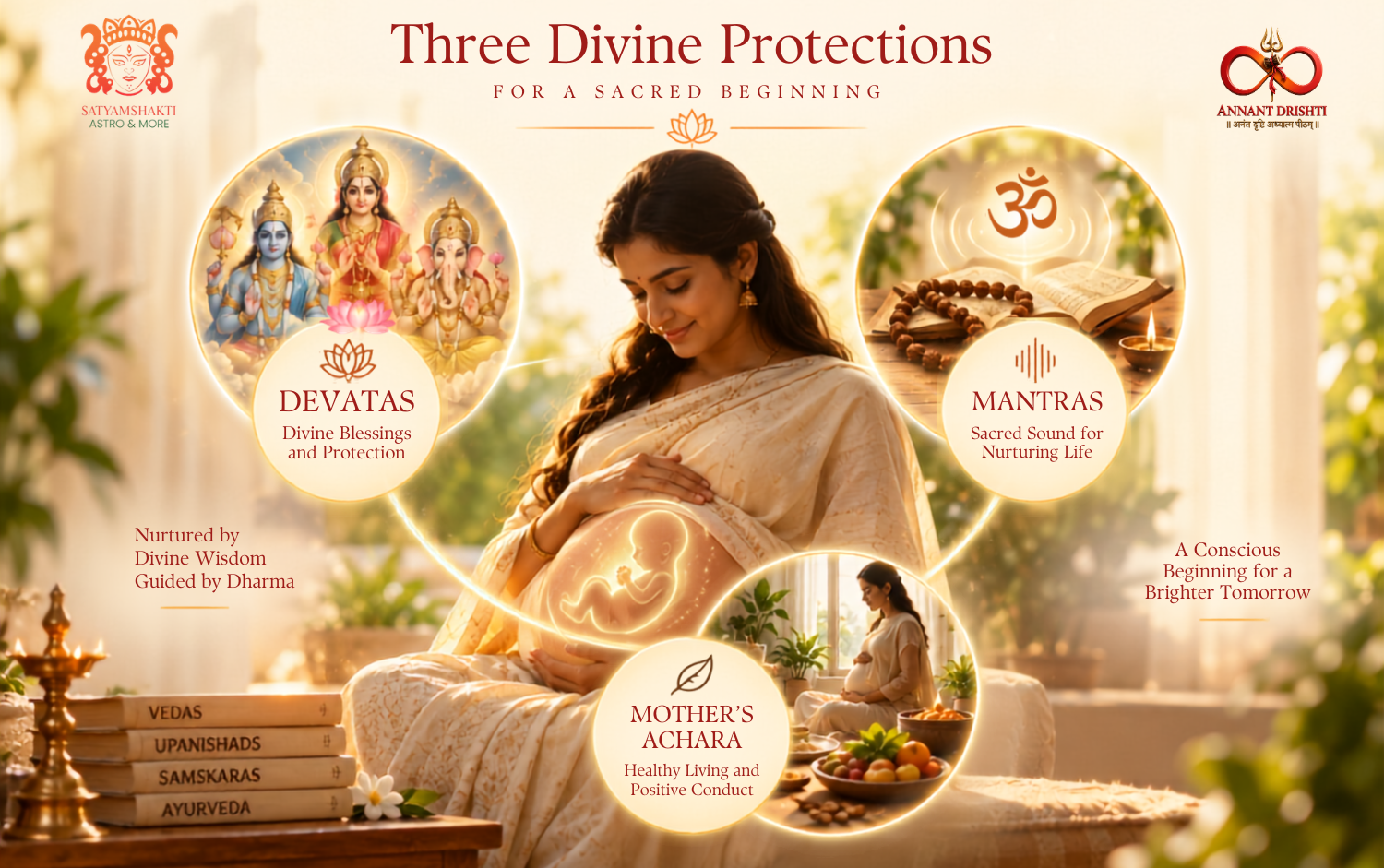
A useful way to understand the traditional approach is through three interconnected pillars:
- Devata which is the Divine,
- Mantra these are the sacred sounds, and
- Achara which is the conduct and lifestyle surrounding the mother.
Each of these principles has deep roots in Hindu textual and ritual traditions surrounding conception, pregnancy and childbirth.
Ancient Hindu texts show remarkable awareness of life developing within the womb. The Rig Veda 10.184, for example, contains prayers connected with conception and invokes Vishnu, Tvashta, Prajapati and Dhata in relation to preparing the womb and establishing the embryo. The Atharva Veda also preserves prayers concerning conception, pregnancy, protection and successful childbirth.
Later Hindu traditions developed prenatal Samskaras including Garbhadhana, Pumsavana and Simantonnayana, although their interpretation and ritual performance vary between texts, communities and regions.
The underlying message remains powerful:
Pregnancy deserves consciousness, prayer, care and responsibility.
The first dimension of Garbh Sanskar is Devata Smarana which is the remembrance and invocation of the Divine.
Vedic pregnancy-related prayers invoke different divine powers rather than identifying one universal “pregnancy deity.” Vishnu, Prajapati, Dhata, Tvashta and other Devatas appear in relevant Vedic passages, while later devotional traditions may turn to one’s Ishta Devata, Kuladevata or family deity.
Why invoke a Devata?
Spiritually, the couple is acknowledging something profound: this new life is not merely our possession.
The parents provide the home, nourishment, love and Samskara, but life itself remains sacred. For modern couples, this principle can be incorporated through simple daily worship, lighting a diya, offering a prayer, visiting one’s family deity where appropriate, or maintaining remembrance of the Divine throughout pregnancy.
The objective should be Ashirvada to get divine blessing and not fear-driven ritualism.
The second pillar is Mantra.
Hindu tradition has always given extraordinary importance to Shabda that is sacred sound. Vedic mantras accompany Samskaras because mantra transforms an ordinary action into one performed with sacred intention.
During Garbh Sanskar, suitable mantra-japa, nama-smarana, stotras and peaceful Vedic recitation should become part of the mother’s spiritual routine.
But this needs to be understood correctly. Mantra gives the mother a sacred space for concentration, devotion and inner peace.
And because certain Vedic and Tantric mantras require Diksha or specific procedures, couples should seek knowledgeable guidance instead of randomly combining mantras found on social media.
Perhaps the most practical pillar is Achara that is conduct, routine and way of living. Ayurvedic texts, contain detailed discussions of Garbhini Paricharya, or care of the pregnant woman.
The deep principle remains extremely relevant: You cannot separate the wellbeing of the Garbha from care for the mother.
For a modern Garbh Sanskar programme, Achara can mean creating a sattvic and supportive environment: appropriate nutritious food, adequate rest, peaceful communication, emotional support, suitable spiritual reading and avoiding unnecessary stress where reasonably possible.
Importantly, this should never become a system for blaming mothers. Pregnant women experience normal emotions of fear, sadness, anger, tiredness and anxiety. Garbh Sanskar should not create the frightening belief that every negative thought will harm the baby.
Achara means conscious care, not impossible perfection.
The husband’s Achara matters too. So does the behaviour of the family. If everyone expects the mother to remain peaceful while surrounding her with conflict and pressure, the spiritual principle has been misunderstood.
This is where authentic Vedic Garbh Sanskar becomes especially meaningful for today’s couples.
Think of the three pillars together: Devatas provide the spiritual orientation. Mantras create sacred remembrance. Achara brings that spirituality into everyday life.
Prayer without responsible living is incomplete. Mantra without compassion becomes mechanical. Achara without inner connection can become merely a lifestyle checklist.
When all three come together, pregnancy can become a deeply conscious period for the entire family.
And modern medical care remains essential throughout. Garbh Sanskar should complement qualified obstetric care, recommended prenatal screening, appropriate nutrition and prescribed treatment and not replace them.
Garbh Sanskar does not promise parents a “perfect baby.” Its invitation is far more meaningful.
Create a home in which a new life is welcomed through Dharma.
Let the Divine be remembered. Let sacred sound become part of the atmosphere. Let the mother’s wellbeing be protected. Let the father participate. Let the family become supportive. And let ancient wisdom work alongside responsible modern healthcare.
The womb may be the child’s first physical home but the consciousness of the family becomes the environment surrounding that home.
Couples seeking personalised Garbh Sanskar guidance, pregnancy mantras, Vedic prenatal Samskaras or spiritually appropriate practices during pregnancy Connect with me on WhatsApp +91 750 707 5962