
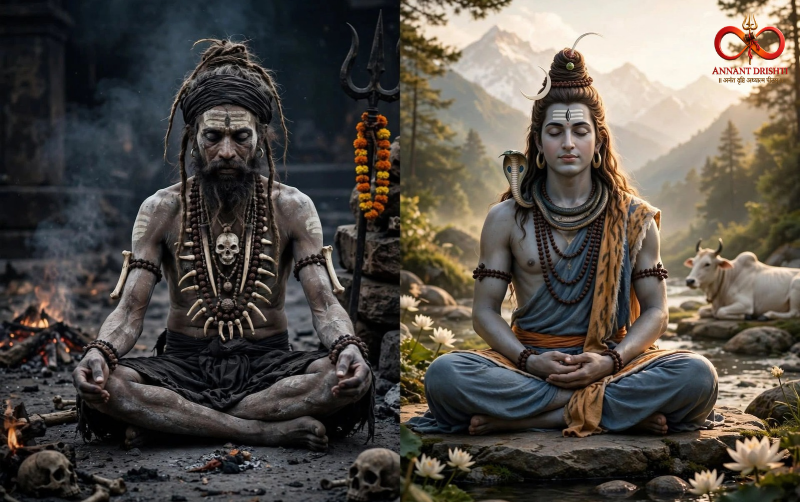
Social media is flooded with a striking image: ascetics with heavy rudraksha beads, kohl-lined eyes, ash-smeared faces, holding skull bowls and tridents against dark cinematic backdrops.
This is the aesthetic of Aghora, the most radical path within Shaivism. Yet Shiva is also Uma-Maheshwara, the compassionate householder, Sadashiva, pure transcendent consciousness, and Dakshinamurthy, the silent guru. Why does the fiercest form captivate us more than the peaceful ones?
The Magnetism of Edgy Spirituality
Authentic Aghora is rooted in radical non-duality. Nothing is impure because everything is divine. By meditating in cremation grounds and breaking taboos, the practitioner seeks to dissolve fear, disgust and ego.
To an audience tired of sanitized wellness, this looks like spiritual rebellion. It replaces soft pastels with raw intensity and appeals to our desire to feel untamed and beyond judgment.
The Ego’s Ultimate Costume
The irony is sharp. Aghora aims at total dissolution of ego, yet its aesthetic can become the ego’s finest outfit. Wearing fierce symbols without the inner discipline creates an illusion of elite status and a shortcut to power, bypassing the slow work of ethics and emotional mastery.
The Quiet Mastery of Sadashiva
Perceived Aghora today is high contrast, taboo breaking and camera ready. Sadashiva and Shiva-Shakti are the opposite: subtle, inward and integrative, focused on balancing masculine and feminine, logic and intuition through stillness. This quiet work rarely goes viral because it offers no dramatic photo, only invisible transformation.
Looking Beneath the Ashes
We are drawn to darkness because it promises mystery and power. But true spirituality is not the costume of strength, it is the practice. The test is simple: has your path made you more aware, compassionate and free, or just given your ego a new trident to hold?
Www.annantdrishti.com– an upcoming Spiritual Institute teaching Kashmir Shaivism


[…] 2. The Energy: The Subtle Body in Conversation […]