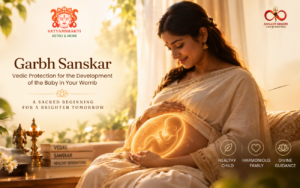
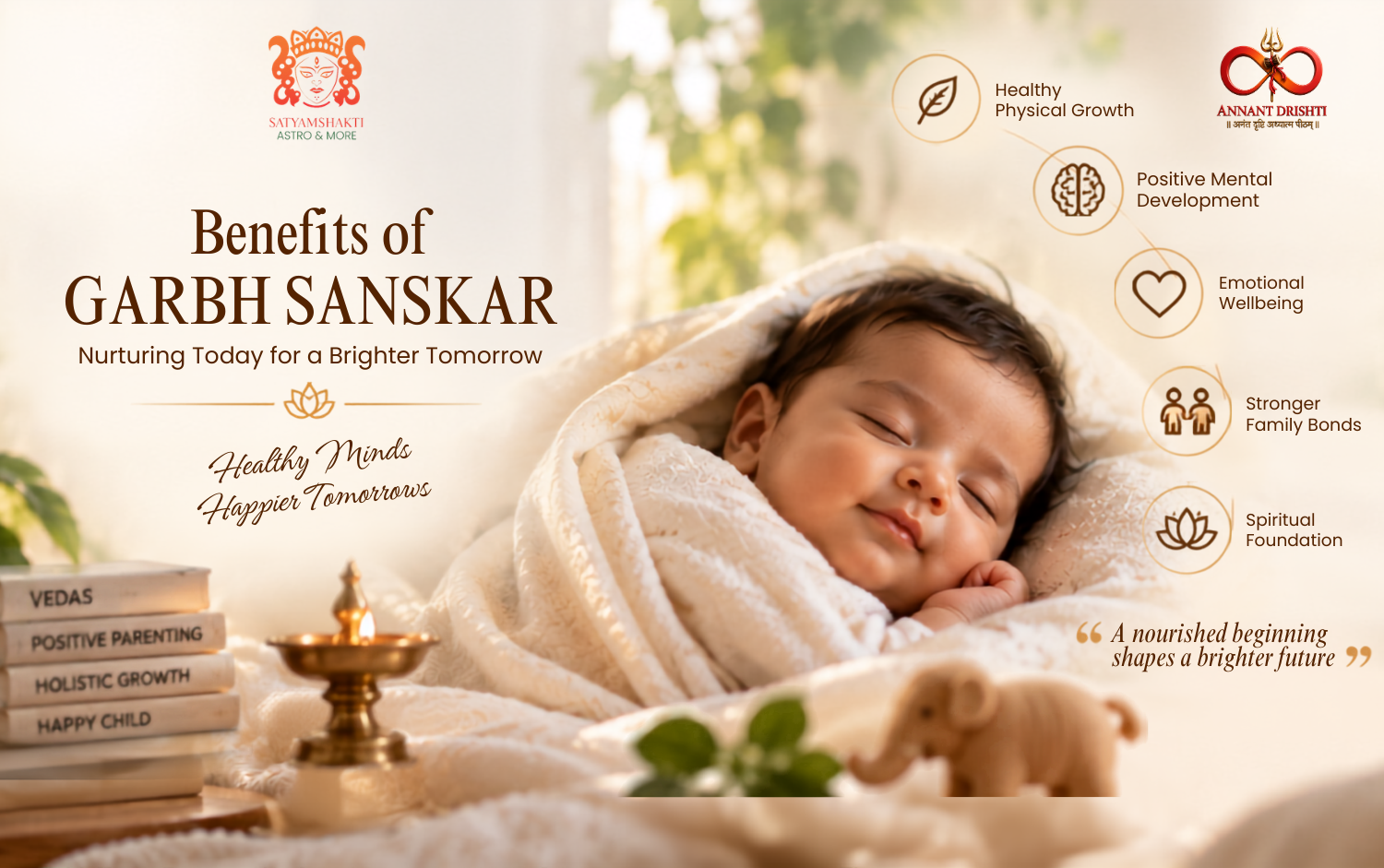
Pregnancy changes more than the body. It changes the emotional world of a woman, the atmosphere of a family and, in the Sanatana tradition, marks the beginning of a sacred responsibility towards a new Jiva.
In the first part of this series, we explored what Garbh Sanskar is and its relationship with Vedic and Hindu prenatal traditions. The natural next question is: What are the benefits of performing Garbh Sanskar during pregnancy?
Garbh Sanskar is best understood not as a single ritual, but as a conscious approach to pregnancy. Prayer, suitable mantra recitation, meditation, sattvic living, positive communication, spiritual reading, family support and traditional Samskaras may all become part of this journey.
Its greatest value lies in transforming pregnancy from something that simply happens into a period that is approached with awareness, devotion and care.
One of the most practical benefits of Garbh Sanskar during pregnancy is its emphasis on Shanti.
Pregnancy can naturally bring excitement as well as uncertainty. A regular routine of gentle prayer, meditation, mantra chanting and spiritual contemplation can give the expectant mother dedicated moments to slow down and reconnect with herself.
Modern research also gives us good reason to value maternal emotional wellbeing. Stress, anxiety and depression during pregnancy are important aspects of prenatal health, and relaxation-based interventions including music and mindfulness practices have been studied for their potential to support maternal wellbeing.
This does not prove every traditional Garbh Sanskar claim scientifically. Rather, it shows why creating a calm and supportive pregnancy environment is meaningful even from a contemporary perspective.
One of the most beautiful aspects of Vedic Garbh Sanskar is sacred sound. Mantra-japa, stotras, nama-smarana or listening to peaceful devotional recitations can make spirituality part of the mother’s everyday routine.
The objective should not be fear “What will happen if I miss today’s mantra?”
A mother may use these moments to remember her Ishta Devata, cultivate gratitude and consciously welcome the life developing within her.
Certain advanced Vedic or Tantric mantras, however, require Diksha or Guru guidance. Garbh Sanskar should therefore favour practices appropriate to the individual rather than treating every mantra found online as universally suitable.
Garbh Sanskar encourages the mother and family to become more aware of the environment surrounding pregnancy.
What are we eating? How are we speaking to each other? Is the mother getting adequate rest? Is the home constantly stressful? Are we giving her emotional support?
This is where an ancient spiritual idea becomes remarkably practical. Sattva is not created by ritual alone. Kind words are sattvic. A peaceful home is sattvic. Nourishing food appropriate to the mother’s medical needs is sattvic. Rest is important. So are affection, reassurance and responsible prenatal healthcare.
Garbh Sanskar can therefore encourage the entire household to participate in creating a more supportive environment.
A Garbh Sanskar routine gives parents intentional time to acknowledge and connect with the baby before birth.
Speaking lovingly, praying together, listening to gentle music or simply sitting quietly with awareness of the pregnancy can make this period emotionally meaningful.
Research into prenatal maternal-foetal attachment describes pregnancy as an important period in the developing emotional relationship between mother and unborn child.
Garbh Sanskar gives this connection a distinctly Dharmic and spiritual dimension: the baby is not viewed merely as a biological development, but welcomed with reverence as a new life entering the family.
Sanatana Dharma surrounds important transitions of life with Samskaras they include prenatal rites such as Garbhadhana, Pumsavana and Simantonnayana, although their exact procedures, meanings and timing differ across textual, regional and family traditions.
These practices remind parents that raising a child begins with responsibility.
For younger families living busy modern lives, Garbh Sanskar can become a meaningful way of reconnecting pregnancy with Vedic wisdom, family tradition and spiritual values without abandoning modern medical care.
The mother should never carry the responsibility of Garbh Sanskar alone. The father should participate in prayers, accompany her during spiritual practices, help create a peaceful home and provide emotional and practical support. Grandparents can contribute through family traditions without turning them into pressure or superstition.
When approached correctly, Garbh Sanskar becomes a family Sadhana. The question changes from “What should the pregnant woman do?” to: “What kind of environment should we create to welcome this child?”
That is a much deeper spiritual question.
This is where I will be very clear. Garbh Sanskar can aid but not guarantee a baby’s intelligence, appearance, personality, gender, future success or freedom from disease.
It is best to remember the this is not Vedic tradition versus modern medicine. It is responsible prenatal healthcare accompanied, by meaningful spiritual practice.
Garbh Sanskar is not about extravagant rituals. It is about intention. When parents consciously surround pregnancy with prayer instead of fear, harmony instead of unnecessary conflict, awareness instead of carelessness and Dharma instead of mere routine, pregnancy itself becomes sacred.
Your child may not yet have entered your arms, but they have already entered your life.
Garbh Sanskar is an opportunity to welcome that life with love, consciousness and the blessings of the Divine.
For families seeking a structured Garbh Sanskar programme, Vedic pregnancy guidance or personalised spiritual practices during pregnancy Connect with me on WhatsApp +91 750 707 5962