
Modern spirituality sells perpetual bliss, but the older tradition offers a deeper truth. Peace is our substrate, yet souls take birth for different dharmas.
Sat Chit Ananda is not a prize for the few. In Vedanta it is the substrate of being, existence, consciousness, bliss. The question is not whether you are made of it, but what your soul took birth to do with it.
This is adhikari bheda, difference in qualification. Roles are not random or punishments. They follow what the soul has learnt, processed and endured across births. No two continuums carry the same weight, so no two dharmas are identical.
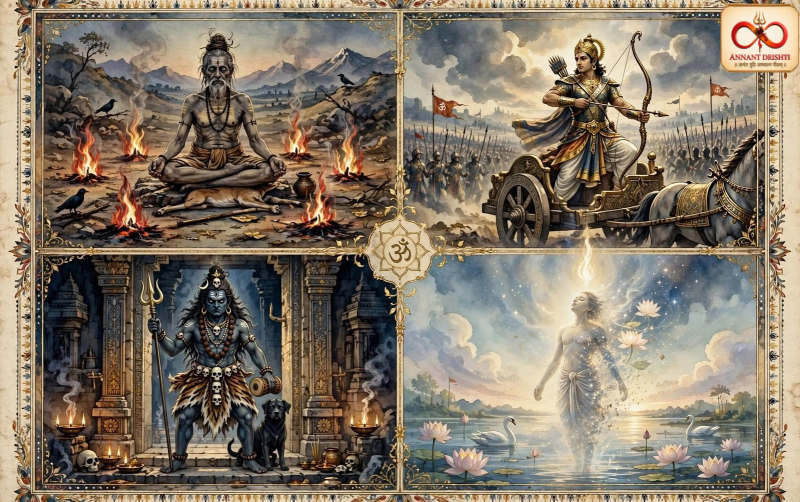
🔥 The Tapasvis: Those Who Burn
Some souls burn in tapasya. Their path will not look blissful. It looks like restraint, solitude, repetition, heat.
Tapasya is not self torture. It is the slow burning of vasanas, impressions pulling the mind outward. For them withdrawal is work, not escape. The Gita calls this inner yajna, where comfort itself is the offering. Joy comes rarely, then quietly.
⚔️ The Karmic Warriors: Those Who Battle
Some battle past karma. Life feels like a battlefield not from failure, but because that is their sadhana.
Arjuna sought meditation over war. Krishna refused him. His moksha lay through war, fought without hatred or clinging. This is karma yoga at its fiercest, facing debts, relationships and duties that cannot be bypassed, only completed. For them, spirituality is right action inside conflict.
🛡️ The Rakshakas: Those Who Protect
Some protect, holding dharma for others while their inner life stays turbulent.
In tantra this is Bhairava, guardian of the cremation ground. They do not sit in bliss. They stand at the threshold so others can. Parents shielding a family, teachers absorbing confusion, friends staying in dark places without flinching carry this imprint. Their sadhana is steadiness. Their bliss is borrowed by others.
🌊 The Mumukshus: Those Who Dissolve
Some are here for moksha. Knots are looser, cravings thinner. Inquiry, surrender or devotion ripens quickly into stillness.
This path fills most books because it is most writable. It is not superior or most common. It is simply the phase of a soul that has burned and battled before.
No hierarchy, only function
Tradition never ranks these roles. Fire is not higher than sword, sword not higher than shield. Each is a function of consciousness at a stage of ripening.
Suffering begins when we force ourselves into another soul’s dharma. The warrior forced into stillness feels numb. The mumukshu forced into battle feels broken. The tapasvi chasing bliss feels ashamed.
Stop asking why you are not blissful yet. Ask instead: Am I here to purify, to confront, to protect, or to dissolve? When that is clear, comparison ends and precision begins.
Bliss is what you are. What you are here to do with it, only your soul knows.
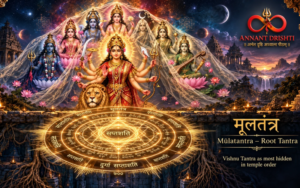
[…] Esoterically the Saptashati is yantra in sound. Kavacha builds the body, Argala locks the door, Kilaka removes the nail that blocks phala, Rahasyas reveal which goddess wakes in which charitra. Navarna sits inside like seed in fruit. […]
[…] Before a single shloka of the Gita is spoken, Krishna does something most commentaries skip. Seeing the Kaurava army arrayed, he tells Arjuna to purify himself and compose a hymn to Durga for victory. Arjuna steps down from the chariot and invokes her with folded hands. The episode sits in Bhishma Parva, Section 23: before the Kurukshetra war, Arjuna worshipped Durga on Krishna’s advice for blessings. […]