
Tantra was never a theory of indulgence, which is why it keeps getting mistaken for one.
Tantra comes from tan, to weave or expand. It is a system for expanding awareness through breath, mantra, visualization and meditation. Sex appears in only a small, mostly symbolic part of the texts.
Most practice was Dakshinachara, the right-hand path, where the union of Shiva and Shakti is inner and meditative. Vamachara, the left-hand path, used forbidden things like ritual union or cremation ground practice to confront duality, not for pleasure. A minority current became the popular image.
Why the distortion stuck
Colonial scholars read the most transgressive passages through a Victorian lens and branded tantra as orgiastic. Shock travels. Later the 1960s counterculture and Western Neo-Tantra repackaged it as spiritual permission for sexual freedom, or as therapy. Both flattened a vast tradition into sex.
Osho
Osho’s 1968 “Sambhog Se Samadhi Ki Ore” did not preach indulgence. His point was psychological: repression makes sex compulsive. Understand it without guilt or craving, he argued, and that energy can settle into awareness. Sambhog was the starting point because that is where people are, not the goal. People kept the slogan, indulge to transcend, and missed his warning: if you are pulled by craving or guilt, you are still overwhelmed.
Aghor
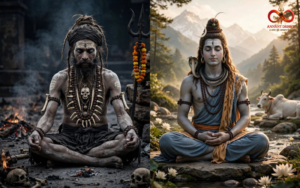
Aghor means a-ghor, not terrible, not separate. It is radical non-duality: seeing the same reality in pure and impure, temple and smashan. Practices with skulls or cremation grounds aim to dissolve attraction and aversion. Needing stronger experiences would be failure, because something is still overwhelming you. The training is equanimity, not excess.
We keep forcing brahmacharya versus bhoga, celibacy versus enjoyment, because extremes are easy to moralize. Tantra offered a third: sakshi, witnessing. Neither suppress nor drown, but know the energy so it stops driving you.
Www.annantdrishti.com
[…] * Experiences Are Not Trophies: […]