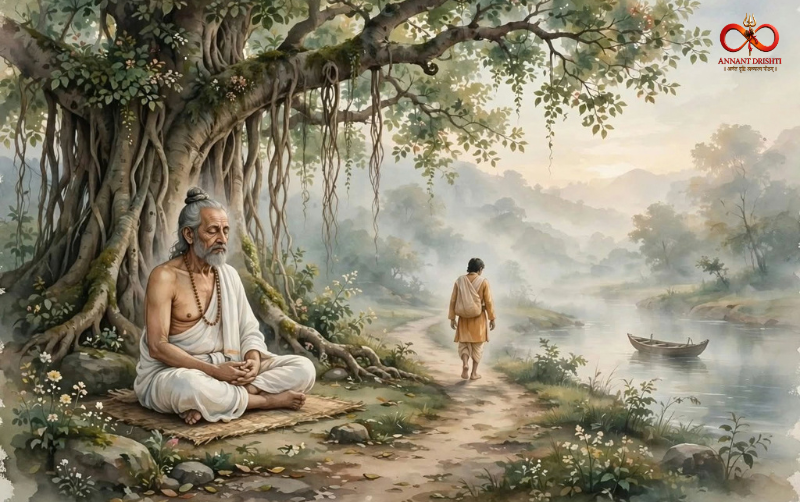

A common fear in spiritual circles: if my disciple fails, will I be punished?
The shastras give a clear, unsentimental answer: No — not automatically.
1. The Guru Is the Boat, Not the Passenger
At diksha, the guru willingly takes on a portion of the shishya’s prarabdha to help burn it faster. This is the grace of initiation.
But fresh karma created after diksha — laziness, adharma, misuse of vidya — belongs to the disciple alone.
The Guru Gita’s spirit is simple: the guru is the boat. If the passenger jumps off mid-river, the boatman does not drown.
2. When the Guru Does Incur Dosha
The guru is affected only by his own choices:
• Initiating without testing adhikara — for money, fame, or follower count
• Giving teevra vidya (Bhairav, Bagalamukhi, Shodashi) to an unprepared vessel
• Knowingly protecting a disciple who is doing adharma, out of attachment
Then it’s not the disciple’s karma transferred. It’s the guru’s own karma of wrong initiation.
A guru who taught rightly, warned rightly, and then remained as sakshi — witness — is untouched.
3. The Tantric Test: Ego
In Kaula, the guru is Shiva-svarupa only while he stays in witness consciousness.
If he thinks, “my shishya must succeed so I look great,” that ahamkara creates his own bandhana.
If he lets the disciple face his fruits without clinging, there is no lepa — no stain.
In one line: The disciple’s failure burns the disciple. The guru burns only if he initiated for ego, or clings out of ego.
That’s why real gurus do pariksha before diksha. Compassion without discernment becomes shared karma.