
The Look of Light: From Ashes to Aesthetic — Why We Worship Appearances, Not Awakening
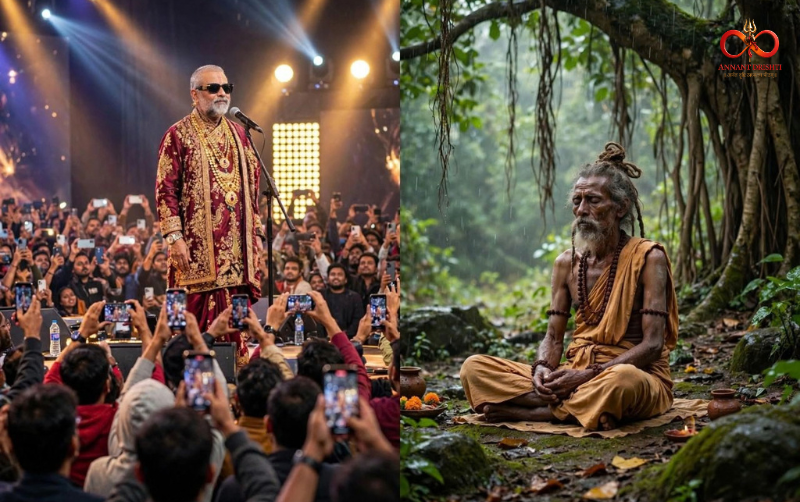
Spirituality was never supposed to be photogenic.
The Buddha left a palace in the night. Mahavira tore off his clothes. The early yogis sat in cremation grounds, covered in ash, deliberately choosing the places society found repulsive. There was no audience to impress. That was the point.
Somewhere along the way, we inverted it.
Why the outer dazzles us
The inner life is invisible and slow. You can’t post a picture of your ego dissolving.
So the mind, which craves proof, settles for proxies:
A serene face. A deep voice. Flowing robes. Foreign followers. A well-lit ashram.
We don’t follow wisdom, we follow the look of wisdom. It’s easier to trust a costume than to do the uncomfortable work of discernment.
And the market knows this. Spirituality today is packaged like everything else — branding, thumbnails, quotes over sunsets. Renunciation itself has become a luxury aesthetic. From ashes to aesthetic, the journey is complete.
The ancient warning
Every tradition warned against this exact trap.
Patanjali called it pratibha — siddhis and charisma that distract from samadhi. Zen masters called flashy teachers “fox spirits.” In the Bhakti movement, Kabir mocked the external show relentlessly:
“Mala to kar mein phire, jeebh phire mukh mahi, manva to chahun dis phire, yeh to sumiran nahi.”
The beads move in the hand, the tongue moves in the mouth, but the mind wanders in ten directions — this is not remembrance.
True sadhana makes a person less special, not more. Less need to be seen. Less hunger to be followed.
What real spirituality looks like
It’s boring to watch. It’s a mother controlling her anger. A man paying his debts honestly. Someone sitting alone, day after day, with no miracle to report.
No halo. No thunder. Just a gradual softening.
The flashy teacher promises transformation in a weekend. The real path promises only this: you will see yourself more clearly, and it will hurt before it heals.
Learning to see
This isn’t a call to cynicism — not every visible teacher is false. But perhaps we need to change our question.
Instead of asking, “How powerful does he look?” ask “How free am I becoming around him?”
Does contact with this person make you more dependent or more independent? More fearful or more fearless? More obsessed with them, or more rooted in yourself?
Outlook impresses. Presence liberates.
Spirituality was never meant to be flashy because truth doesn’t need decoration. A lamp doesn’t shout in a dark room. It just burns quietly — and those with eyes to see, find their way.